ZH-SIG-0006Date observed: 2026-06-01Score: 24/30

Construction Robotics Remains Operator-Led Despite Autonomous Breakthroughs

A systematic review of 375 recent studies finds that operator-led workflows still dominate construction robotics, suggesting that full autonomy remains an exception rather than the industry’s operating baseline.

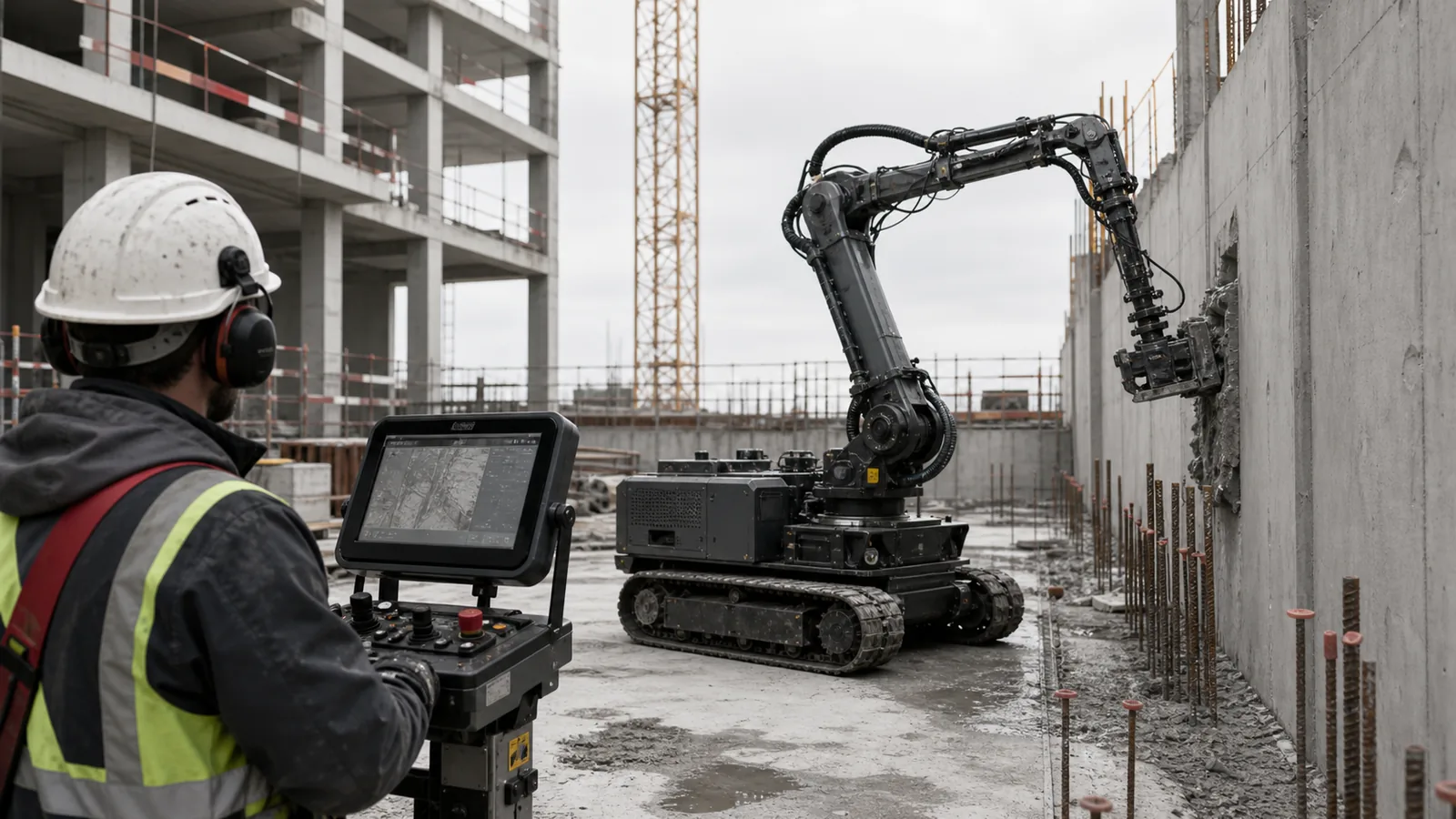
Construction robot working on a concrete wall under human operator supervision

What happened?

FACT: A 2026 PRISMA-based systematic review analysed 375 construction-robotics studies published between 2023 and 2025. It found that operator-led workflows dominate current practice, reflecting limited autonomy and readiness for full automation. The review also found that robotic applications are concentrated in structural construction, while planning, maintenance and demolition remain comparatively underexplored.

INTERPRETATION: Construction robotics is advancing, but the dominant operating model remains human-directed, supervised or collaborative. Recent operator-out breakthroughs are important edge cases; they do not yet represent the baseline across construction tasks.

Why it matters

The difference between a capable robot and an autonomous construction system lies in everything around the machine: task planning, site data, safety, exception handling, interoperability and responsibility. Treating autonomy as a binary label can hide the continued dependence on operators and controlled conditions. Contractors, investors and policymakers need to measure intervention frequency and workflow integration, not only whether a robot can perform a task.

Evidence

The 375-study review links the prevalence of operator-led workflows to limited technology readiness for full automation in construction’s variable environments. A separate review using the Sense–Think–Act framework calls for long-term field trials to validate robustness and acceptance in live construction. An ACM systematic review of automated planning reports that most construction planning processes remain manual despite the availability of AI methods. Earlier review work similarly describes a shift from pure automation toward collaborative and adaptive human–robot processes.

Counter-signal

Systematic reviews necessarily lag the newest commercial deployments. The 375-study corpus ends in 2025 and therefore does not fully capture 2026 operator-out excavation announcements, large robotic construction programs or new autonomous equipment. Academic publications also do not provide a complete inventory of proprietary commercial systems. The operator-led baseline may be changing faster than the literature can measure.

What would change our mind?

We would weaken this Signal if independently verified datasets show sustained operator-out performance across multiple contractors, machine brands, geographies and changing site conditions, with low intervention rates and competitive economics. We would strengthen it if new deployments remain confined to single tasks, require extensive site preparation, or depend on continuous remote supervision that is not disclosed in autonomy claims.

Sources and references
  1. www.sciencedirect.com
  2. doi.org
  3. www.annualreviews.org
  4. www.mdpi.com
  5. www.sciencedirect.com
  6. www.sciencedirect.com
· ·