ZH-SIG-0002Date observed: 2026-08-17Score: 24/30

Autonomous Excavation Is Moving Onto Live Construction Sites

Fully autonomous excavators are now being reported on live U.S. infrastructure sites, while major equipment makers prepare broader construction autonomy—moving the field from supervised trials toward operator-out deployment.

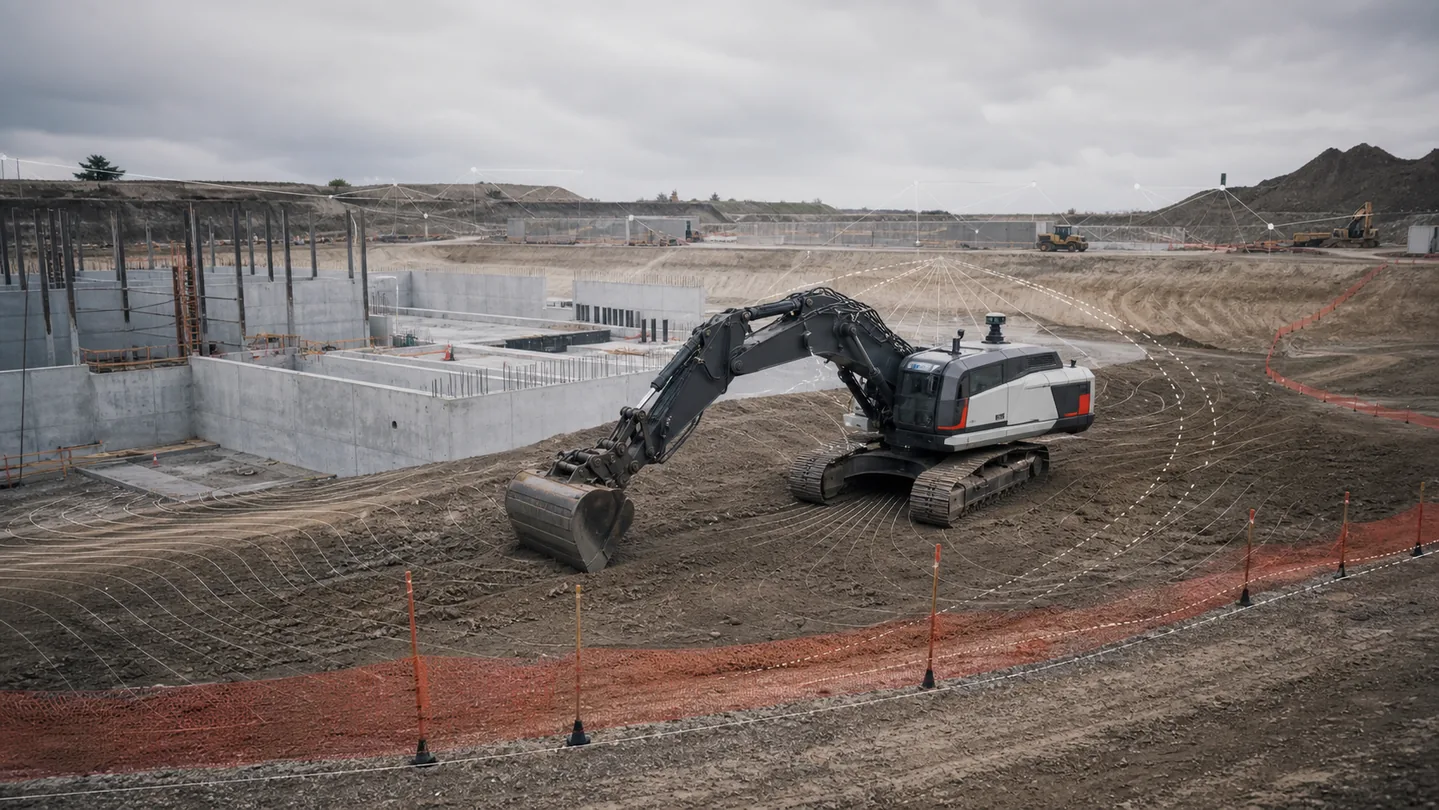
Autonomous excavator grading mapped terrain inside a bounded live construction work zone

What happened?

FACT: On August 17, 2026, Bedrock Robotics announced fully autonomous excavators operating without onboard operators on three live U.S. construction sites: a Nevada water-treatment project with Sundt Construction and two large earthwork projects in Texas with Champion Site Prep and Zachry Construction. Caterpillar has separately introduced an autonomy roadmap spanning excavators, loaders, dozers, haul trucks and soil compactors for construction.

INTERPRETATION: Autonomous heavy equipment is beginning to cross from supervised trials into operator-out production work. The transition is starting with bounded, repetitive earthmoving tasks rather than complete autonomous jobsites.

Why it matters

Earthwork sits at the beginning of many infrastructure and building projects; delays there propagate through every later trade. Retrofitting existing machines could lower the adoption barrier compared with replacing entire fleets. More importantly, these deployments give physical AI a measurable economic role: moving material on active projects rather than performing demonstrations. If performance holds, contractors may reorganize crews around supervision, planning and exception handling instead of one operator per machine.

Evidence

Bedrock reports that its Operator system is performing autonomous excavation on a Nevada water-treatment facility, a multi-million-cubic-yard Texas earthwork site and a 1.2-million-cubic-yard civil sitework project. The company says the retrofit adds sensors and compute without permanent machine changes, while a site manager defines the initial plan. Caterpillar has announced autonomous trenching, loading and grading capabilities and a five-machine construction autonomy fleet. However, Caterpillar also describes large construction-site testing as a near-future step, showing that the wider market remains earlier than Bedrock’s announcement may imply.

Counter-signal

The strongest deployment evidence remains company-issued and has not yet been accompanied by independently audited data on uptime, productivity, intervention frequency, safety performance or cost. Excavation is one bounded scope within a much more variable construction process. These deployments do not yet demonstrate autonomous coordination across trades, machine types or continuously changing site conditions.

What would change our mind?

We would weaken this Signal if independent site data shows frequent human intervention, limited productive hours, safety restrictions that remove the claimed operational advantage, or economics that do not outperform supervised automation. We would strengthen it if multiple contractors publish repeatable performance data across different geographies, machine brands and site conditions.

Sources and references
  1. www.globenewswire.com
  2. bedrockrobotics.com
  3. www.caterpillar.com
  4. www.caterpillar.com
  5. www.constructiondive.com
· ·