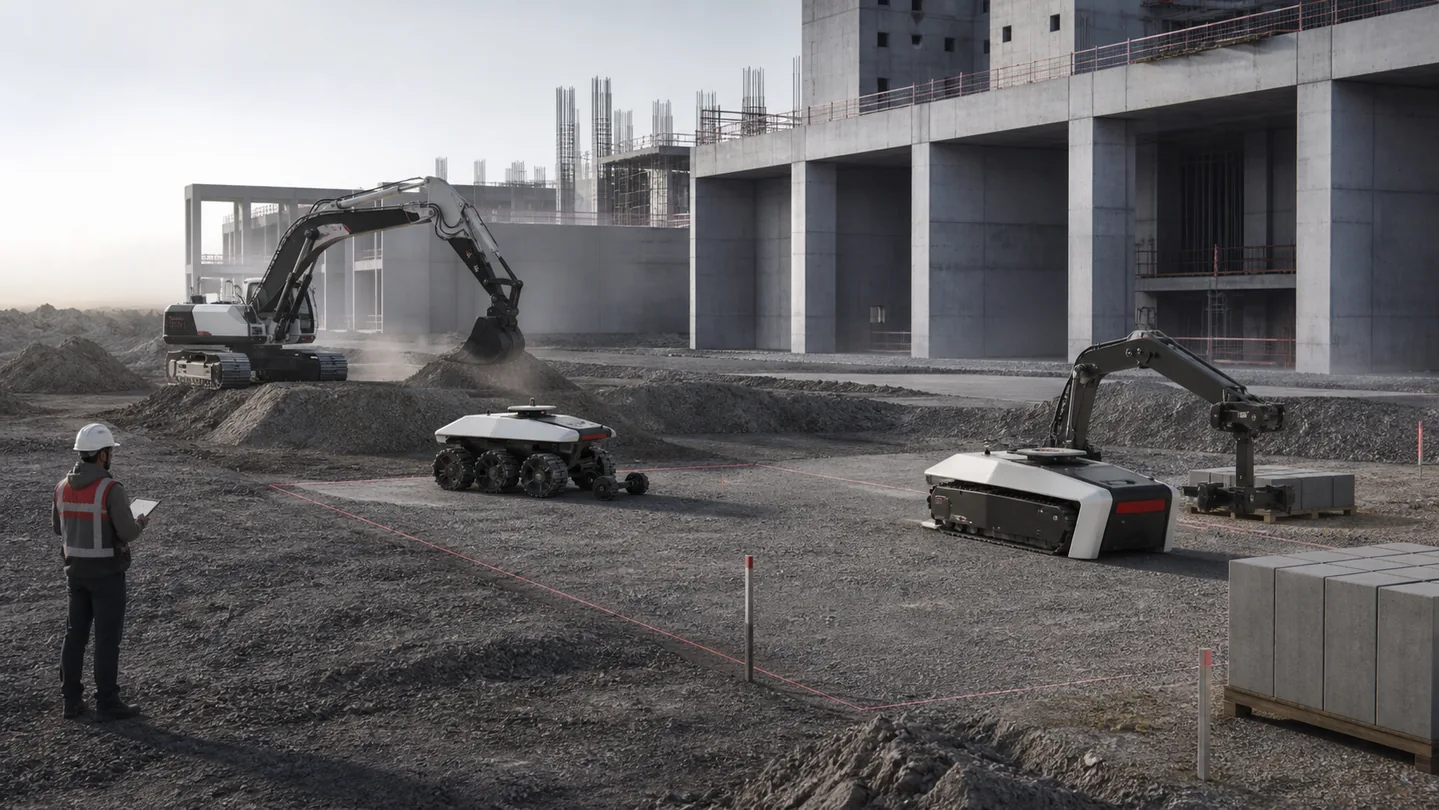
Construction autonomy is currently scaling through task-native machine types rather than general-purpose humanoid robots. Excavators, concrete printers, compactors and bricklaying systems already embody the geometry, force and workflow of a specific construction process; autonomy adds perception, planning and control to a machine that is physically suited to the job.
Humanoids are now entering construction sites, but their early roles are predominantly inspection, imaging and data collection. The contrast is not between advanced and primitive robotics. It is between two deployment strategies: adding intelligence to proven production equipment, or recreating the versatility of a human worker in a new machine.